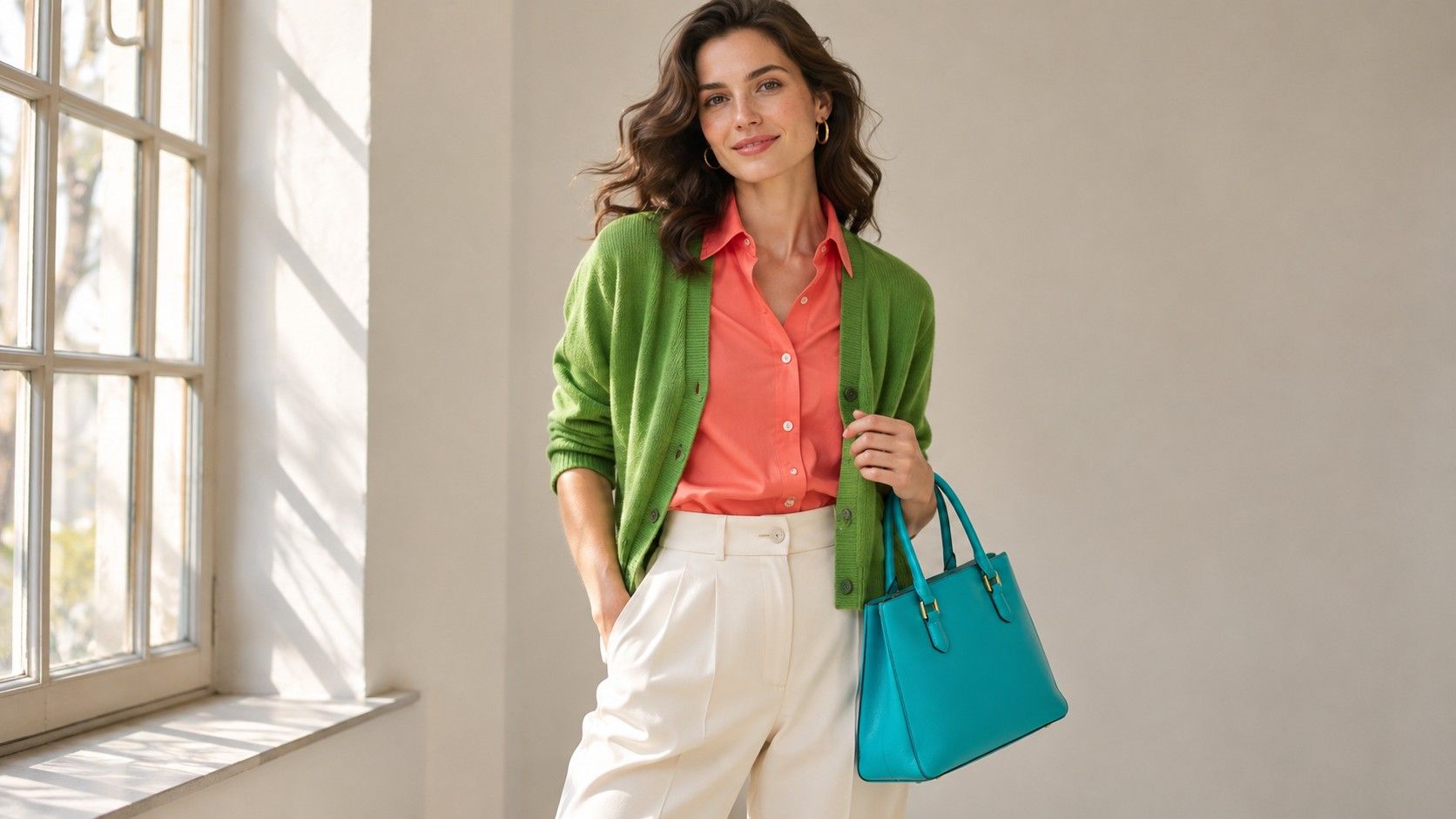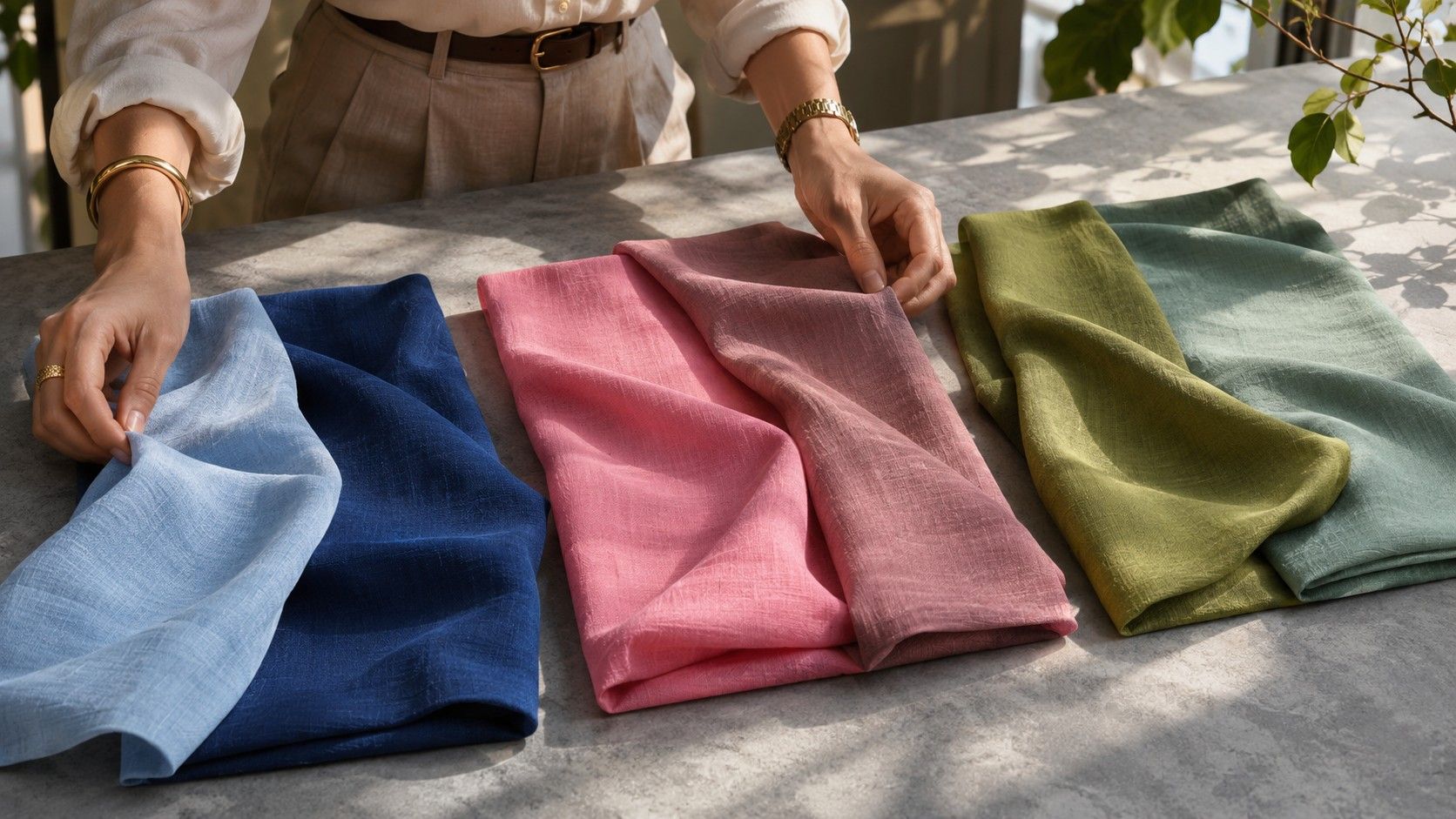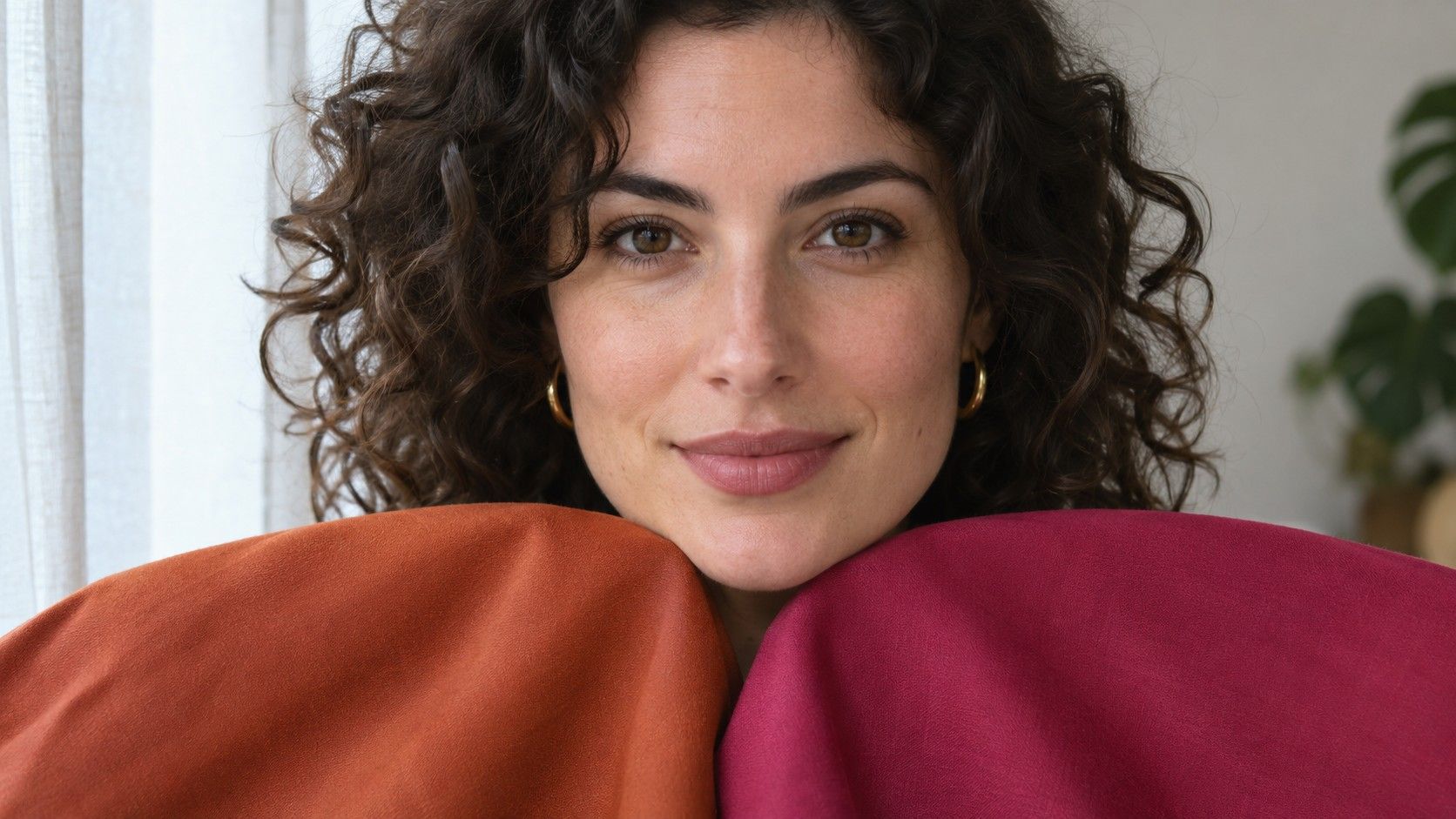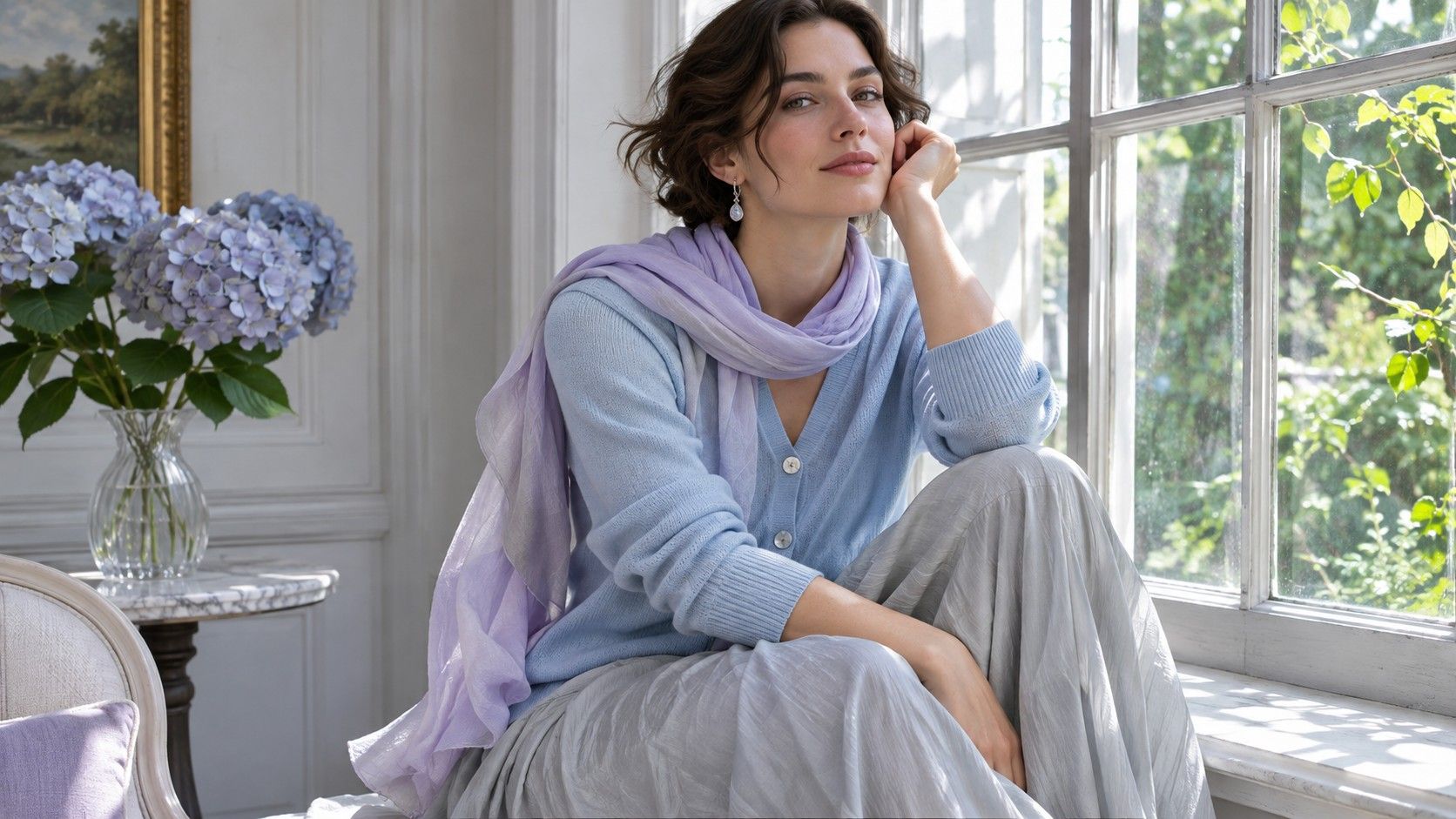
A Light Summer color palette takes its shape from pale colors with a cool or slightly softened cast. Powder blue, shell pink and very light lavender are useful places to start. You can ground them with faded denim, a soft blue-gray or a restrained mid-blue. The main decision is how to add enough structure and depth to an outfit while keeping the colors near your face in the range you enjoy wearing.
Check whether lightness makes the biggest difference
Take a pale cool blue and a mid-depth cool blue in similar fabrics and try each under your chin. Look in indirect daylight. Keep your shoulders, hair and existing neckline covered in the same way for both comparisons. Notice whether the deeper fabric gives you a clear outline or draws extra weight toward your collar. Ask someone else to describe what they see without telling them which color you expect to win.
Try a pale rose and a medium cool rose to see whether the same pattern holds. The darker sample can look stronger because it is more saturated, so pick a medium pink with a similarly soft finish. If a pale shade feels chalky, try a slightly richer color of similar depth before jumping straight to the medium shade. Some garments get their pale appearance from a powdery texture and some from a light dye. They can look quite different on.
Hold each winning color farther away from your face for a moment. A light blue you like at the neckline might feel too delicate in a wide trouser. A deeper plaid that you prefer away from your face may work as a skirt. Record which pieces look useful in different positions so your palette has room for coats, pants and shoes as well as tops.
Tell Light Summer and Light Spring apart
Compare pale cool pink with a light peach that has similar strength. If both pink and peach are very light, a temperature preference is easier to see. Think about how even the skin appears around the cheeks and jaw and how clearly you can see your features. A light color that feels fresh on the hanger can make a warm shadow on camera if the room has yellow lamps. Give the same fabrics another look at a window without changing where you stand.
Try a light cool blue-gray next to a pale warm aqua. The more muted blue may suit Light Summer when it stays recognizably blue, while a lightly clear aqua can favor a slightly warmer direction. There is overlap between the palettes, especially in light blues and gentle greens, so a tie on one pair is ordinary. A cool rose versus peach and cool blue-gray versus warm aqua give you two distinct comparisons.
If you find a preference for quiet cool colors at several depths, line up your best pale shade next to a medium Cool Summer example. A light lavender that feels clean and easy may point you toward Light Summer even if you sometimes want mid-blue in your strongest piece. Include your usual hair styling and glasses on a second try-on. Dark frames can change how much depth you want near your face and can be part of the outfit intentionally.
Anchor a pale outfit with a useful middle shade
Start with a powder blue shirt, a light cool gray jacket and faded mid-blue jeans. Look at the outfit from several steps away. If the top and jacket blend into one field of pale color, roll the sleeves to show a strip of blue cuff or replace the gray jacket with a mid-blue one. Changing that edge gives the outfit shape without adding a dark collar. Keep a light neckline exposed if the jacket alone seems heavy.
For work, put a cool rose blouse with blue-gray trousers and medium slate shoes. The shoe can repeat the value of the trouser without matching the fabric exactly. Add a pearly gray cardigan when you want a quieter silhouette. For an evening outfit, try a lavender top over a soft navy skirt and use a blue-gray shoe to connect the darker skirt to the lighter top. Leave jewelry choices until you see the outfit as a whole.
A pale dress may need a more clearly defined jacket or belt if the fabric and details are all light. Try a narrow mid-blue belt and compare it with a wide charcoal belt. The narrow one can keep the outline clear without drawing attention away from the neckline. If you would rather use the darker belt, add a soft navy bag or darker shoe to echo the depth somewhere else.
Use texture to keep pale colors visible
Light fabric can pick up the color of whatever sits underneath it. Put a thin powder blue shirt over a white layer and over a gray layer, then face a window. The white can make it look brighter, while the gray can reveal more of the shirt's muted cast. Do the same test with the underlayers you usually wear. A sheer blouse can change color when you try it on even though the sample in the store looked right.
Try mixing smooth and textured fabrics of similar depth. A fine-gauge lavender knit over an airy blue cotton shirt shows two surfaces when the values are close. A slightly deeper denim can make both easier to see. In a pale print, look for motifs that still read as gentle blue or rose from arm's length. A dark decorative outline repeated across every motif may make the fabric look much stronger than its pale background suggests.
Compare metals in the setting where you will wear them. A fine brushed silver piece can give a light outfit a quiet line, while a broad mirror-polished cuff makes a bright statement. Pale and translucent accessories can also hold color in a subtle way. Try a cool blue acetate frame or a frosted lavender pendant near your own shirt to check whether it contributes enough color against the fabric.
Keep a travel set of three colors
Pick a pale top you trust, a middle-depth neutral and a lighter layer. An example is a cool rose sweater, blue-gray trouser and powder blue shirt. Try the shirt alone with the trouser and with the sweater over it. If your three pieces give you distinct outlines and different amounts of visible color, they are enough to guide another few purchases. Photograph the fabrics together near a window so you can remember the relationships between them.
Pack a medium blue scarf or a light neutral cardigan if you need a way to adapt the same outfit to brighter or darker surroundings. Try the scarf with both tops and check if one looks too similar. If you are shopping for a dress or coat to extend the capsule, bring one of the pieces along as a real reference. Try the new piece with your accessories and usual layers before you rely on its swatch color. A coat with a darker collar, for instance, can change how the pale shirt reads even if the coat's main fabric is close to your palette.